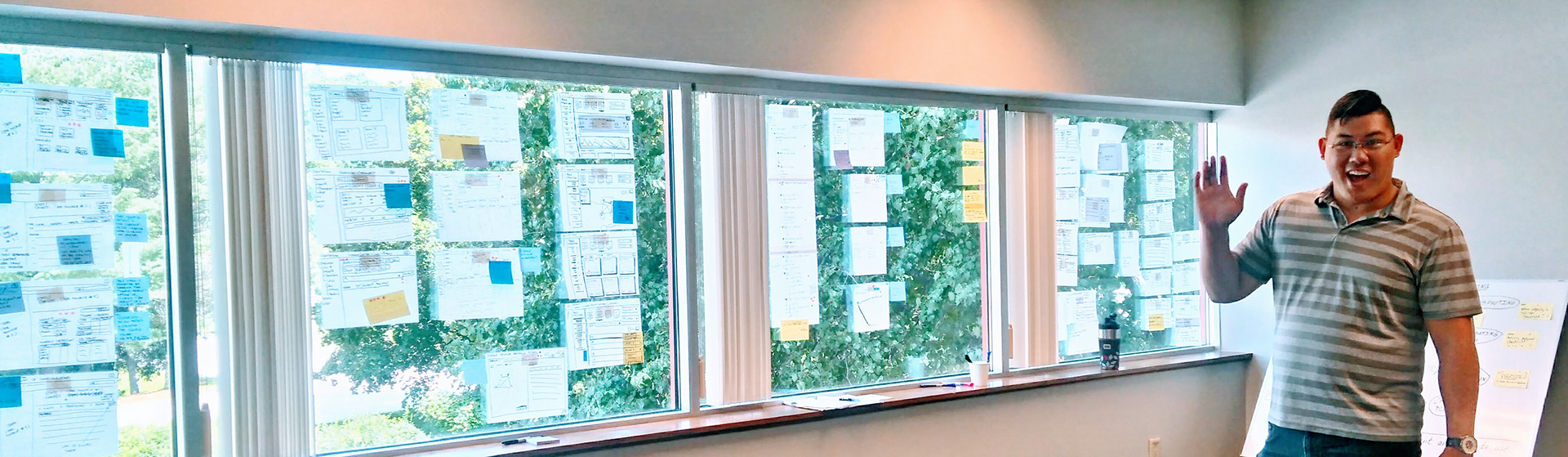
One of the most interesting experiences in Forescout has been to fly to Boston to run a design sprint with our Professional Service colleagues (the most important customer facing department in our business unit) and part of the product management team.
Because we didn’t have a whole week of their time, I edited the framework to make it fit the 4 days time we had. It was a big success!
Because we didn’t have a whole week of their time, I edited the framework to make it fit the 4 days time we had. It was a big success!
The Challenge
With the 5 people involved in the process we focused on a piece of the product that was suffering of scalability issues: the sensor management.
The whole section taking care of this important and structured task, managing all the sensors connected to the control panel, the Command Center, was originally designed and implemented to manage no more than 10 sensors.
In a few years the amount of sensors connected to one Command Center increased to hundreds and after another couple of years to thousands.
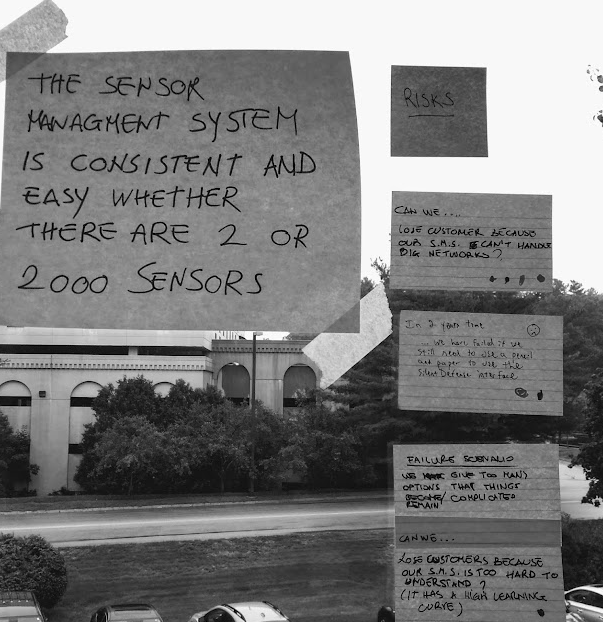
Define the Target
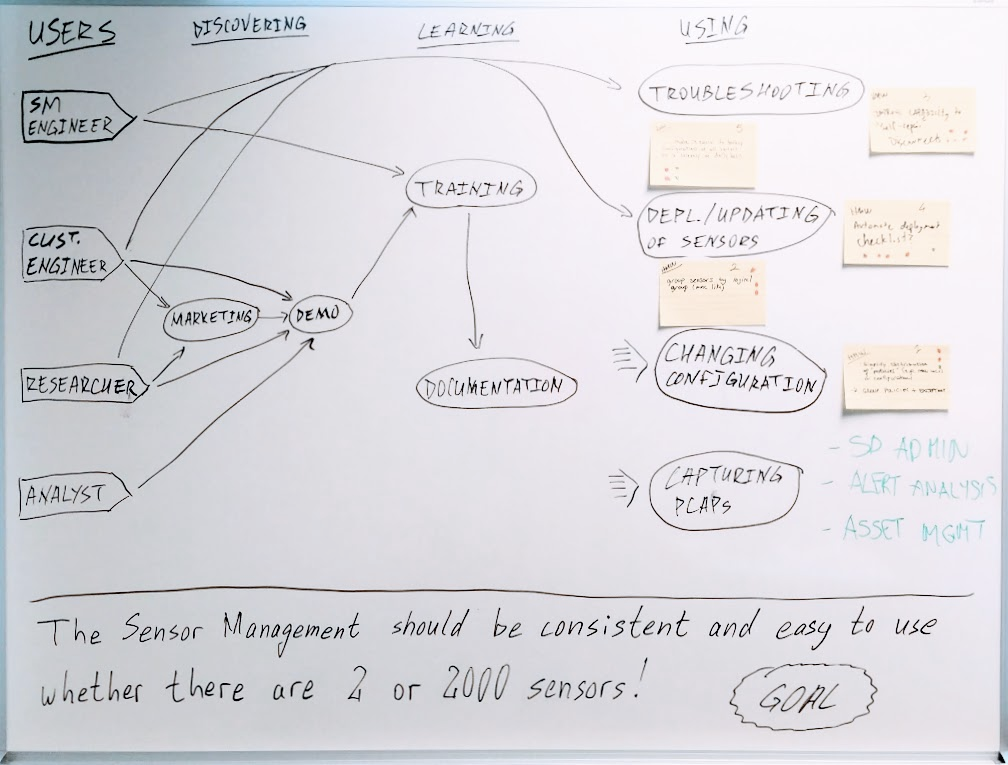
We spent little time mapping the product life cycle and defining the problem since it was well known by the Professional Service team and they were the main source of feedback on it.
A little longer took to define the goal: saying that something must be improved is no foundation for a design process.
After collecting ideas, rephrasing in HowMightWe and voting we came up with a perfect goal: the sensor management should be consistent and easy to use wether there are 2 or 2000 sensors!
A little longer took to define the goal: saying that something must be improved is no foundation for a design process.
After collecting ideas, rephrasing in HowMightWe and voting we came up with a perfect goal: the sensor management should be consistent and easy to use wether there are 2 or 2000 sensors!
Benchmarking and Quick Sketching
We spent a little time benchmarking products carrying features that they found useful for our goals.
The team was awesome, they surely had a lot of ideas about how to improve the system. The issue there was to turn those ideas into a use case that could be discussed with others.
I quickly sketched their ideas while they where explaining them. Visualising what they had in mind allowed them to explain how they would use those features and what for.
Once the use cases where clear they could be discussed and more and better refined ideas came up.
The team was awesome, they surely had a lot of ideas about how to improve the system. The issue there was to turn those ideas into a use case that could be discussed with others.
I quickly sketched their ideas while they where explaining them. Visualising what they had in mind allowed them to explain how they would use those features and what for.
Once the use cases where clear they could be discussed and more and better refined ideas came up.
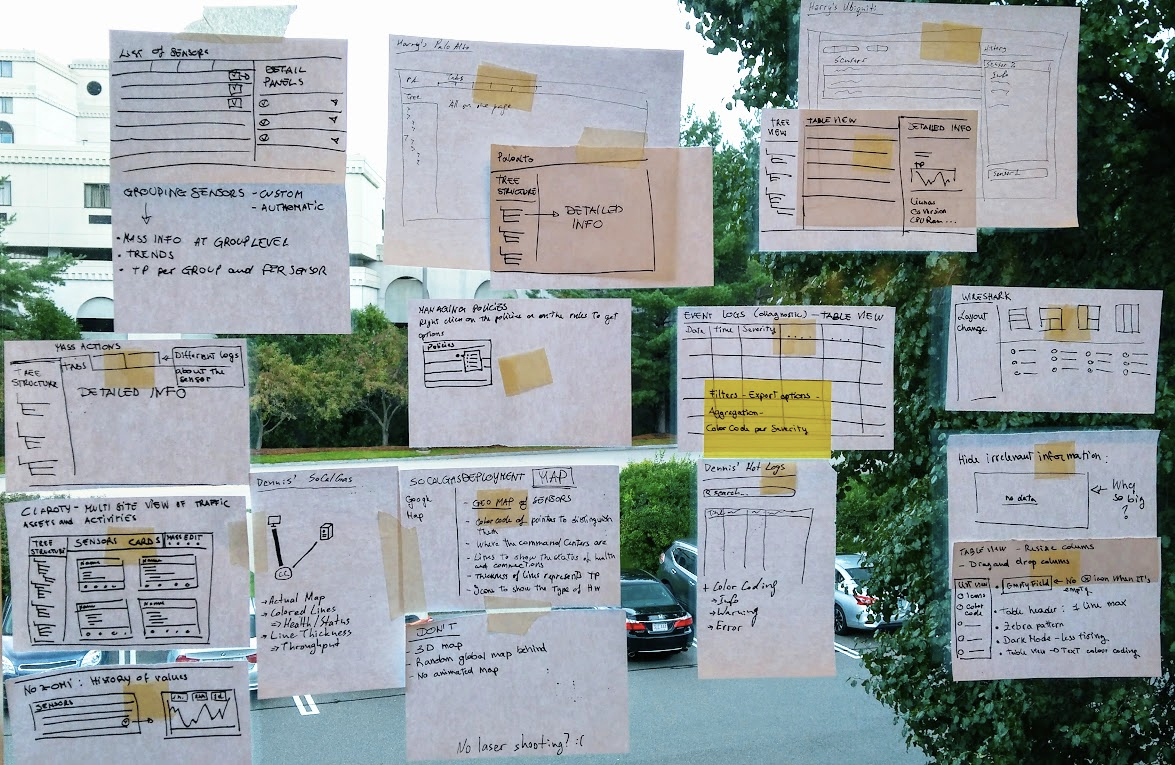
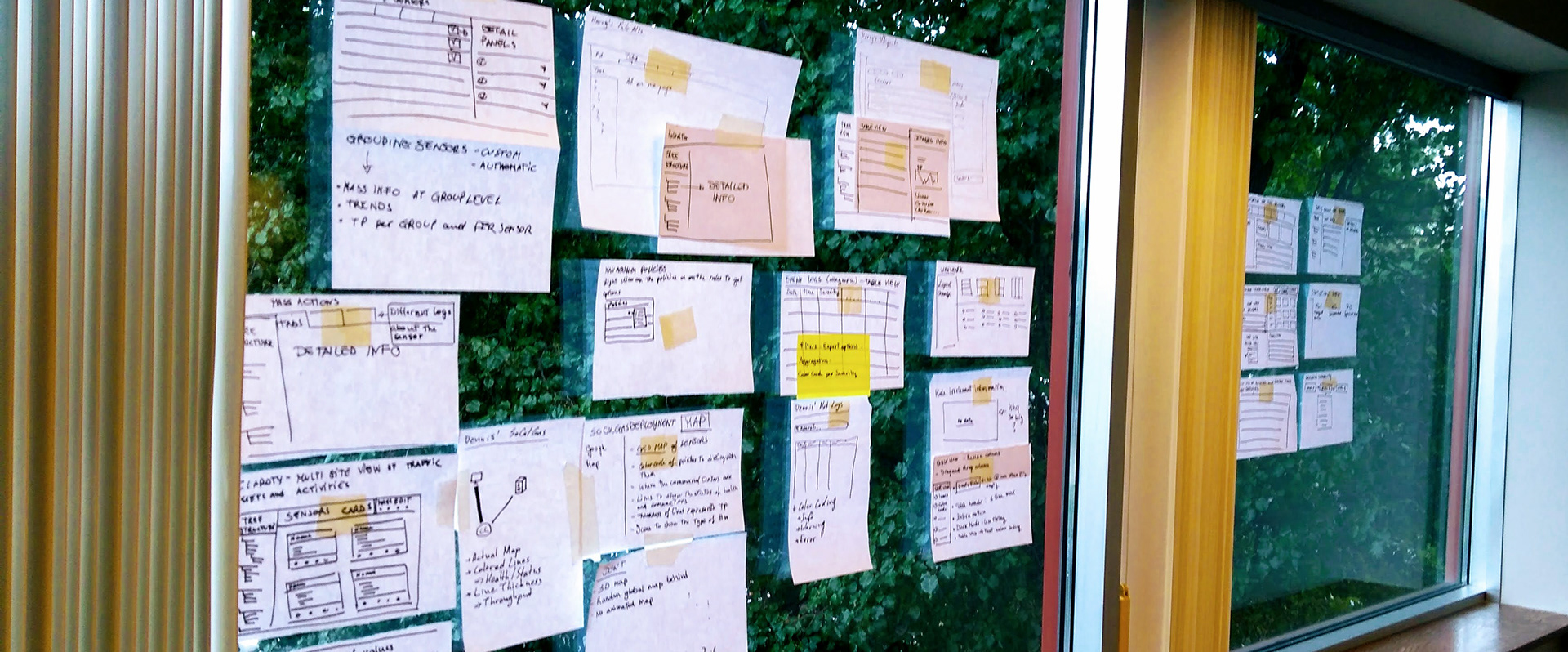
The Sketching Phase
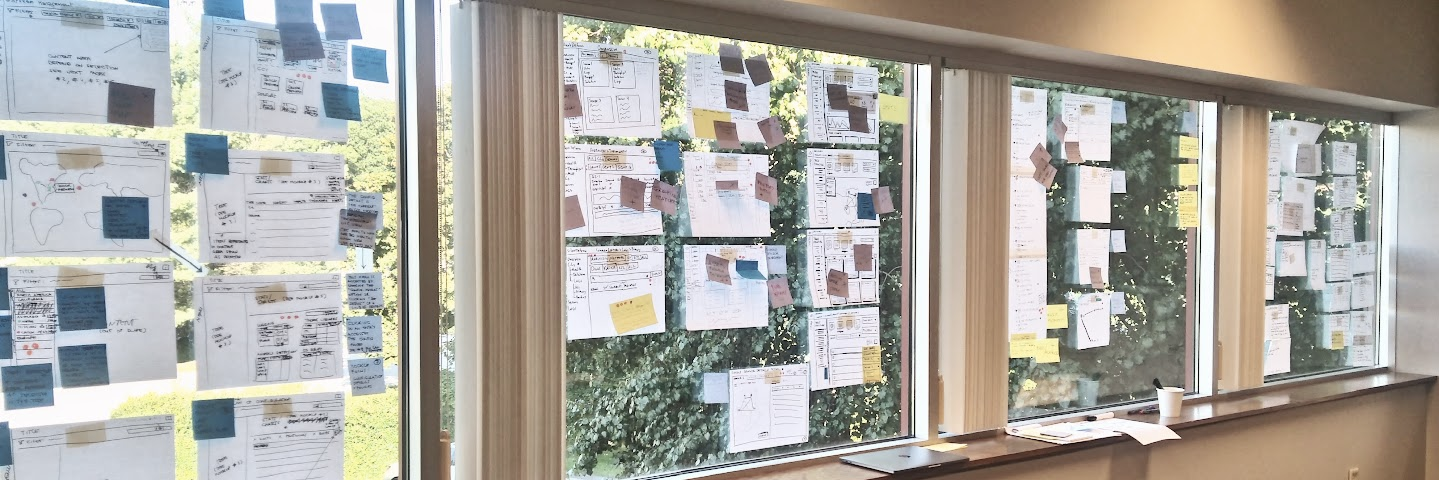
The sketching phase was extremely challenging for them but seeing my quick and dirty sketches of the step before gave them confidence and they did a great job.
I asked them to silently sketch their ideas and to not add any note to the sketches.
After they where done, I sticked everything to the windows and asked them to find the ideas they liked most and stick a note with the use case they thought it would cover.
After voting and discussing the best ideas I helped them sketching their final design on paper
I asked them to silently sketch their ideas and to not add any note to the sketches.
After they where done, I sticked everything to the windows and asked them to find the ideas they liked most and stick a note with the use case they thought it would cover.
After voting and discussing the best ideas I helped them sketching their final design on paper
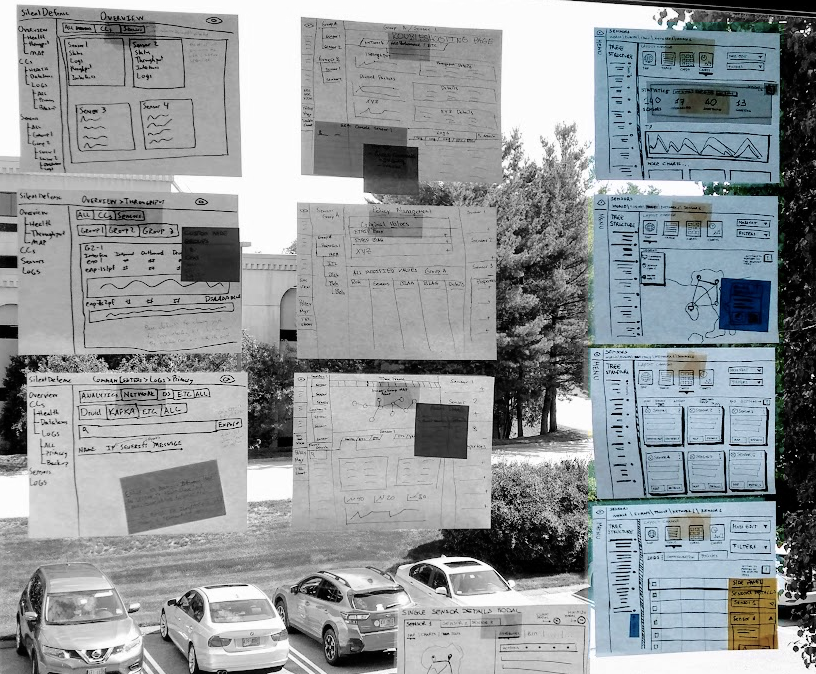
The prototyping
The other designer and I produced a fast prototype in our last night in Boston and we furtherly discussed and tested it within the team the morning after. Unfortunately my contract with Forescout does not allow me to show the end result of this process but I can assure that the journey was at least as amazing.